William Carr and the Ghost of Billy the Kid
🖋️ Blog Post: William Carr and the Ghost of Billy the Kid
By Juniper Ravenwood
🌒 A Name That Shouldn’t Feel So Familiar
There are some historical mysteries that refuse to stay buried, and the legend of Billy the Kid is one of the most persistent. Officially, the story ends at Fort Sumner in July of 1881, when Pat Garrett shot the outlaw whose name had already become larger than life. But as with so many stories from the American frontier, the official version has never fully sealed the grave. Rumors started almost immediately. Sightings, whispers, secondhand tales, and later claimants kept the question alive: what if Billy the Kid didn’t die that night after all?
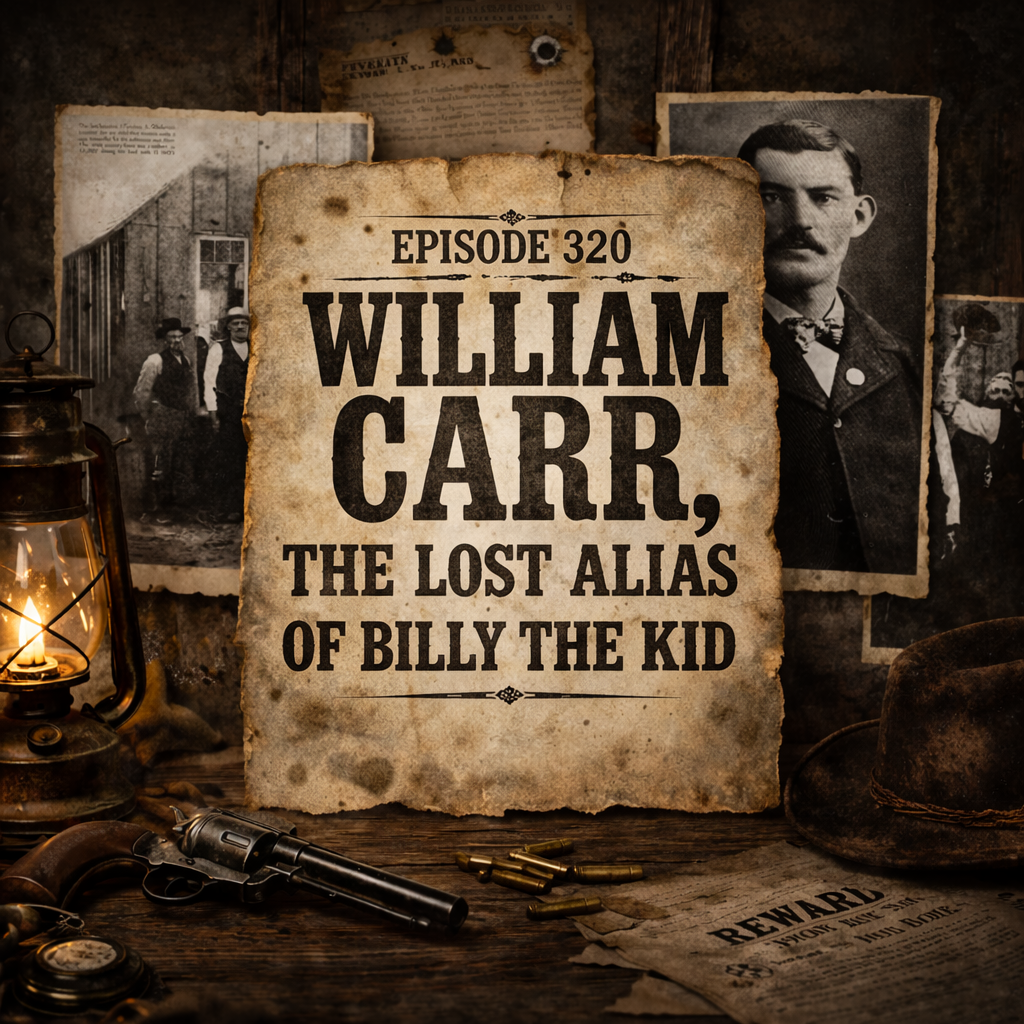
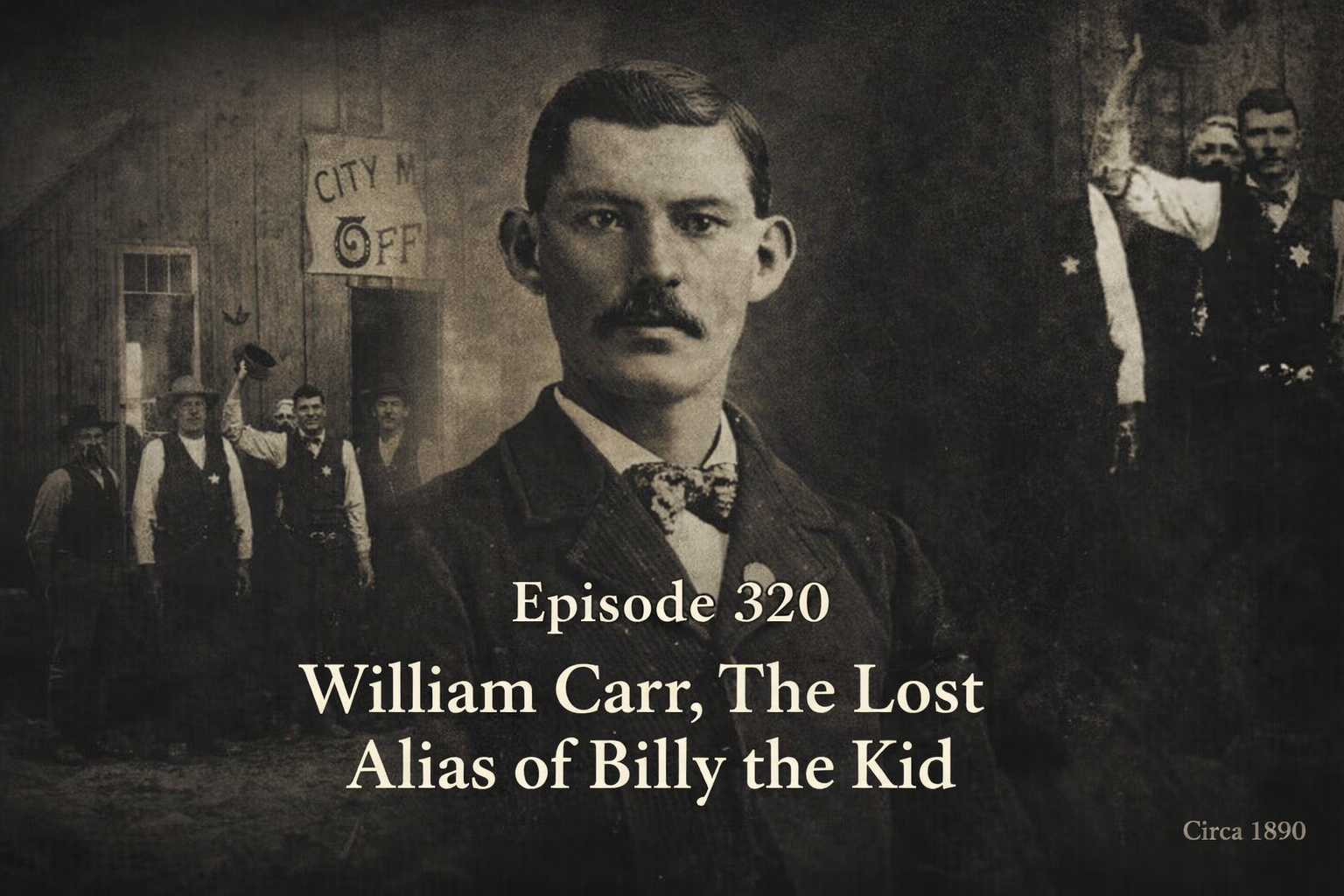
Episode 320 of The Shadow Frequency follows one of the strangest paths in that long-running mystery — the life of a man named William Carr. 🤠🕯️
📜 The Frontier’s Missing Chapter
What makes Carr so fascinating is not simply that he existed in the historical record. It’s that his life seems to echo the later recollections of Brushy Bill Roberts in ways that are difficult to ignore. Carr appears in the right geography, at the right rough period, surrounded by the same kind of violence, law work, outlaw overlap, and frontier drift that Roberts would later describe.
He was reportedly a U.S. deputy marshal, just as Roberts claimed to have been. He moved through Indian Territory and dangerous badge country. He appears in connection with gunfights, outlaw associates, and violent episodes that sound less like the life of a settled deputy and more like the life of a man accustomed to surviving by reinvention.
That alone is enough to raise eyebrows. But then the details get stranger.
🐎🥊 The Coincidences Start to Pile Up
Carr was reportedly involved in horse racing competitions, and Roberts later claimed he had the same kind of background. Roberts also said that in the 1890s he briefly went to Cincinnati and tried boxing. Then you find newspaper mentions of Bill Carr boxing in Cincinnati and references to racing there under names like Texas Kid. That is the kind of overlap that moves a case from “interesting” into “haunting.”
Could it all be coincidence? Of course. Frontier lives were messy, aliases were common, and records were incomplete. But when the same strange patterns keep repeating — deputy work, horse racing, boxing, outlaw contact, missing beginnings, and missing endings — coincidence starts to feel less comfortable.
⚖️ The Lawman with One Boot in Outlaw Country
The most compelling version of Carr is not as a clean heroic lawman, but as a man balanced between worlds. He appears in stories involving the Christian brothers jailbreak, legal trouble, and the sense that his name was floating too close to outlaw circles. That matters because it makes Carr feel like someone living in the blurred space between badge and bandit — exactly the kind of double life that would fit a hidden identity.
Even later, Carr reportedly turns up in connection with the Crazy Snake affair, still riding with armed men, still near danger, still somehow present when history gets rough. He doesn’t read like a footnote. He reads like a survivor.
🌫️ A Man Who Enters the Record — Then Slips Out Again
Maybe the eeriest part of the William Carr story is the ending, or rather the lack of one. Carr seems to thin out in the record and disappear. One line of research points to the 1900 Tecumseh Republican as one of the last notable mentions before reports suggest he left for Cuba and vanished from history. That kind of ending feels less like closure and more like evaporation.
And that is what makes the case so perfect for The Shadow Frequency. This is not just a question of whether Billy the Kid survived. It’s a question of whether history sometimes preserves a man’s footsteps while losing his name. Whether an alias can become so convincing that it lives a whole second life. Whether the record itself can become a haunted place. 👣📚
🕯️ Why the Story Endures
William Carr may have been exactly who the record says he was: a hard, complicated frontier lawman with a violent life and a murky ending. But if he was something more — if he was the bridge between Billy the Kid and Brushy Bill Roberts — then this isn’t just a Western mystery. It’s a ghost story told through court records, newspaper columns, and forgotten names.
And maybe that’s why it lingers. Because the idea of a man outriding his own obituary is just eerie enough… and just plausible enough… to keep us looking over our shoulder at the past.
— Juniper Ravenwood 🌙

Producer, The Shadow Frequency
Juniper Ravenwood is the heart and soul behind the production of The Shadow Frequency podcast, bringing her passion for the paranormal and storytelling to every episode. Born in the wide-open plains of South Dakota, Juniper grew up surrounded by tales of mystery and the unexplained, which sparked her fascination with the eerie unknown. With a deep love for podcasting and the boundless world of the internet, she crafts each episode with a blend of spooky atmosphere and meticulous care, ensuring listeners are drawn into the shadows. As the producer, Juniper not only manages the show’s chilling vibe but also connects with fans through the Mailbag segment and the podcast’s vibrant online community. When she’s not diving into creepy stories or exploring the digital realm, you can find her chasing new paranormal mysteries or dreaming up ways to make The Shadow Frequency even spookier. Connect with Juniper and the show at shadowfrequencypodcast.com or shadowpodcast@protonmail.com!

The Mantis Men of Stephens State Park