The Legend of the Badalisc
The Monster in the Mountains 🌨️
There are some legends that feel as though they belong to the landscape itself. The Legend of the Baladisc is one of those stories. This is not just a tale about a horned creature in the dark. It is a story born from steep ridgelines, forested slopes, winter silence, and the uneasy relationship between village life and the wild beyond the last lighted window.
A Shadow at the Edge of the Alps 🌲
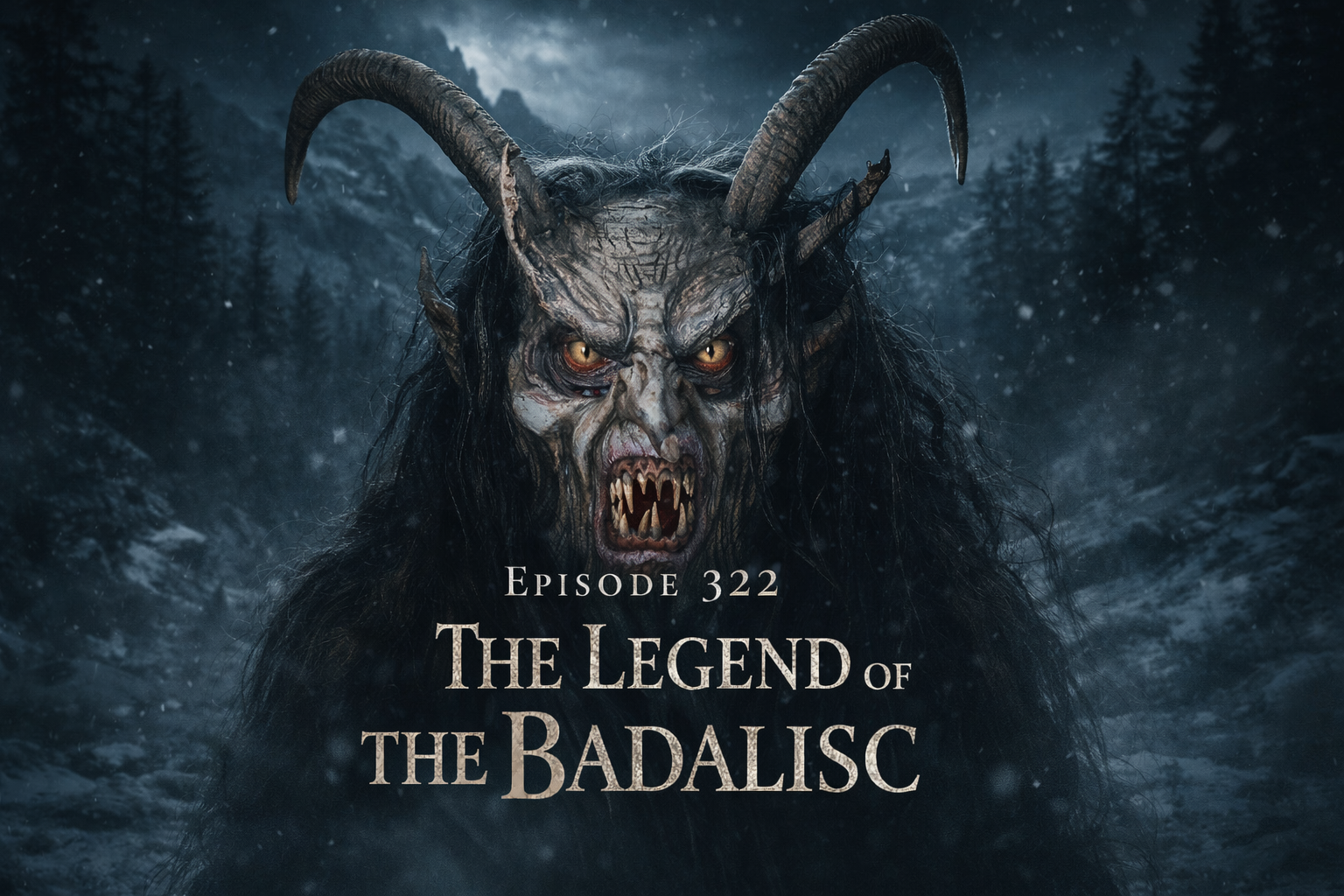
For the episode, we begin with the eerie image that pulls listeners in immediately: a horned being standing somewhere near the tree line, half-seen in blowing snow, watching from the edge of human safety. That atmospheric framing fits the terrain beautifully. Val Camonica, in Lombardy, is a striking Alpine region of woods, rivers, meadows, glacier-shaped landforms, and towering elevations. UNESCO describes it as a place where wooded mountainsides, glaciers, and valley-bottom settlements exist in dramatic contrast, which helps explain why stories from this region often feel charged with both beauty and danger.
The Documented Tradition Beneath the Legend 📜
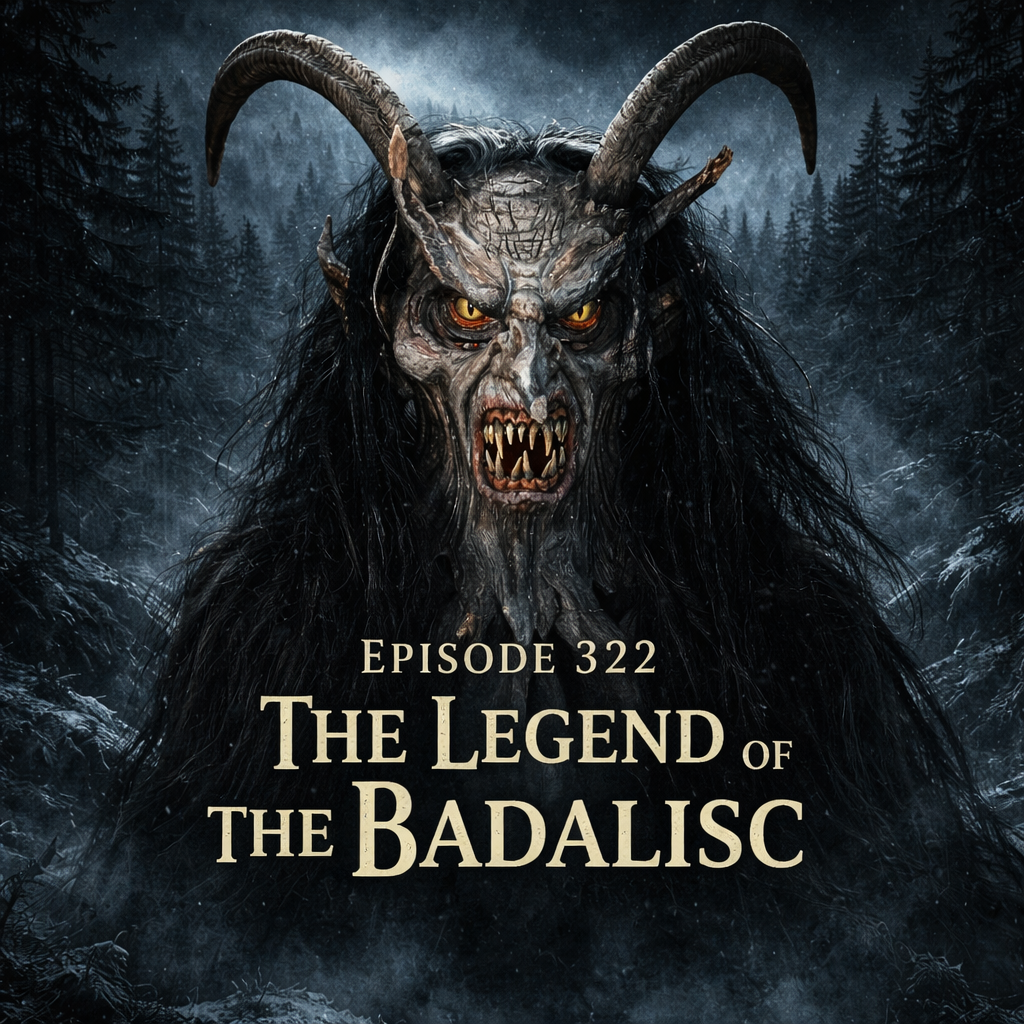
What makes this episode especially strong is that the folklore core is real and documented. In Andrista, the Badalisc is not just an invented horror image for modern audiences. The official Lombardy heritage record describes a ritual held on the night of January 5, when villagers stage a dramatic hunt, find the Badalisc in hiding, bind it with rope, and drag it into town. The being is described with cow hides, goat horns, bright eyes, and a large mouth. Once brought before the community, it hands over a written speech that is read aloud in dialect and rhyme, exposing gossip, notable events, and the tensions of the previous year before the night moves into food, dancing, and release.
Why This Story Still Works So Well 👀
That is where the episode gets really interesting. The Baladisc is not frightening only because it looks monstrous. It is frightening because it knows things. In the tradition, the creature belongs to the woods, yet somehow sees into the life of the village. That makes it more than a beast. It becomes a kind of moral outsider — something from beyond the community that returns carrying the truth. Folklorist Francesca C. Howell’s research captures this beautifully, describing how local residents connect the Badalisc to the land itself, to memory, identity, and even conscience. One participant described it as a symbol of the land and a connection to nature, while another said it stays in the woods all year “taking note” of betrayals, disagreements, and everything else worth exposing.
Monster, Metaphor, or Mountain Memory? ⛰️
That tension is exactly why the story endures. On one level, it can be enjoyed as a creepy mountain-creature legend. On another, it clearly serves a deeper community purpose. Ritualizing the capture of a wild being, allowing it to “speak,” and then transforming fear into feasting gives the tradition a psychological power that goes far beyond costume and performance. It becomes a yearly confrontation with secrecy, guilt, social pressure, and the idea that nothing stays hidden forever in a small isolated place.
Why We Wanted to Cover It on The Shadow Frequency 🎙️
For a paranormal show, the Badalisc is a perfect subject because it sits at the crossroads of folklore and fear. It lets us tell an eerie story without losing the historical grounding that makes the mystery richer. Even the darker “Baladisc on the ridgeline” version gains power from the fact that a real community preserved a horned wilderness figure for generations. That tells you something important: whether people feared a literal creature or not, the idea of the being mattered enough to survive. And sometimes that is where the deepest chills come from — not proving a monster existed, but realizing a culture kept making room for one.
The Mountain Looking Back 🌙
At the heart of this episode is a simple but unsettling thought: maybe the wild is not just empty space beyond the village. Maybe it is presence. Maybe it is memory. Maybe the reason the Baladisc still works is that it turns an old human fear into something tangible — the feeling that the dark beyond the firelight is not only alive, but aware.
— Juniper Ravenwood

Producer, The Shadow Frequency
Juniper Ravenwood is the heart and soul behind the production of The Shadow Frequency podcast, bringing her passion for the paranormal and storytelling to every episode. Born in the wide-open plains of South Dakota, Juniper grew up surrounded by tales of mystery and the unexplained, which sparked her fascination with the eerie unknown. With a deep love for podcasting and the boundless world of the internet, she crafts each episode with a blend of spooky atmosphere and meticulous care, ensuring listeners are drawn into the shadows. As the producer, Juniper not only manages the show’s chilling vibe but also connects with fans through the Mailbag segment and the podcast’s vibrant online community. When she’s not diving into creepy stories or exploring the digital realm, you can find her chasing new paranormal mysteries or dreaming up ways to make The Shadow Frequency even spookier. Connect with Juniper and the show at shadowfrequencypodcast.com or shadowpodcast@protonmail.com!
Lost Cities Beneath the Amazon Canopy


 RSS Feed