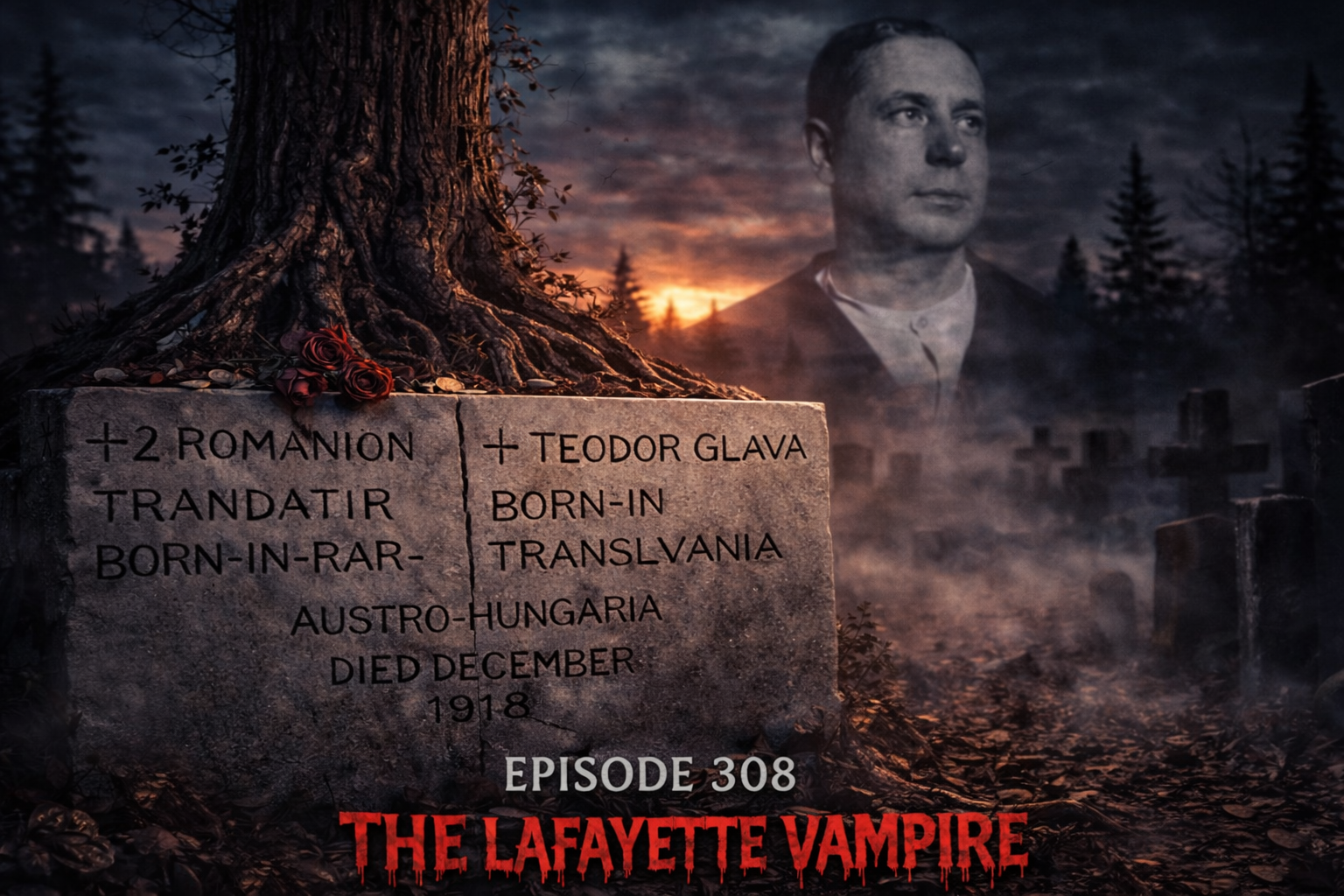
The Lafayette Vampire
Blog Post
By Juniper Ravenwood
The Grave That Turned Into a Legend
There are some stories that begin with a scream, and then there are stories like this one — quiet, weathered, and buried under years of rumor until they become something larger than life. The legend of the Lafayette Vampire is one of those stories.
In Lafayette, Colorado, there’s a grave marker that has pulled generations of curiosity toward it. It isn’t grand or ornate. It doesn’t look like something out of a gothic novel. In fact, that may be part of what makes it so unnerving. It’s simple. Rough. Real. And attached to it is the name of Teodor Glava, a Romanian immigrant miner whose connection to Transylvania helped transform an ordinary burial into one of Colorado’s strangest supernatural legends.
A Real Man Beneath the Folklore
That’s what makes this case so compelling to me: there was a real person at the center of it.
Teodor Glava appears to have been a working man who came to Colorado during a difficult and physically demanding era of coal mining. He died in December of 1918, during a year already overshadowed by disease and loss. Far from home, far from family, and buried in a cemetery that would later become the setting for whispered warnings, Glava’s story reminds us that behind every haunting legend there may be a very human life that got swallowed by time.
Why the Vampire Story Stuck
So how does a miner’s grave become a vampire grave?
Part of it is that one word: Transylvania. For later generations, it was enough. Once the association was made, the story almost seemed to build itself. Then came the other details — the tree near the grave, the rumor of a stake, the idea that something had to be pinned down, and the offerings visitors still leave behind. A little folklore here, a little imagination there, and soon a local burial site becomes a threshold between history and horror.
The American West Doesn’t Usually Get Vampires
That’s another reason this story stands out. Vampire lore feels imported, old-world, ancient. But the Lafayette legend plants those same fears in Colorado soil. It gives the American West its own brush with the undead — not through castles or foggy mountain ruins, but through a mining town cemetery and a community that kept retelling the story.
That contrast is what gives the case its power. It feels familiar and out of place at the same time.
What Still Lingers
Whether the vampire panic was ever “real” in the literal sense may not be the thing that matters most. What remains is the legend itself — the fact that people still visit, still leave coins and trinkets, still talk about the grave like it carries some charge. That tells us something important. A legend survives because it continues to do emotional work for the living.
Maybe the real haunting here is not a monster in the grave, but the way memory changes when no one is left to defend the truth.
And maybe that’s why The Lafayette Vampire still endures. Not because everyone believes it, but because no one can stand in front of that grave and feel absolutely nothing.
— Juniper Ravenwood

Producer, The Shadow Frequency
Juniper Ravenwood is the heart and soul behind the production of The Shadow Frequency podcast, bringing her passion for the paranormal and storytelling to every episode. Born in the wide-open plains of South Dakota, Juniper grew up surrounded by tales of mystery and the unexplained, which sparked her fascination with the eerie unknown. With a deep love for podcasting and the boundless world of the internet, she crafts each episode with a blend of spooky atmosphere and meticulous care, ensuring listeners are drawn into the shadows. As the producer, Juniper not only manages the show’s chilling vibe but also connects with fans through the Mailbag segment and the podcast’s vibrant online community. When she’s not diving into creepy stories or exploring the digital realm, you can find her chasing new paranormal mysteries or dreaming up ways to make The Shadow Frequency even spookier. Connect with Juniper and the show at shadowfrequencypodcast.com or shadowpodcast@protonmail.com!
John Titor, the Time Traveler who logged on