The Grinning Man: Indrid Cold
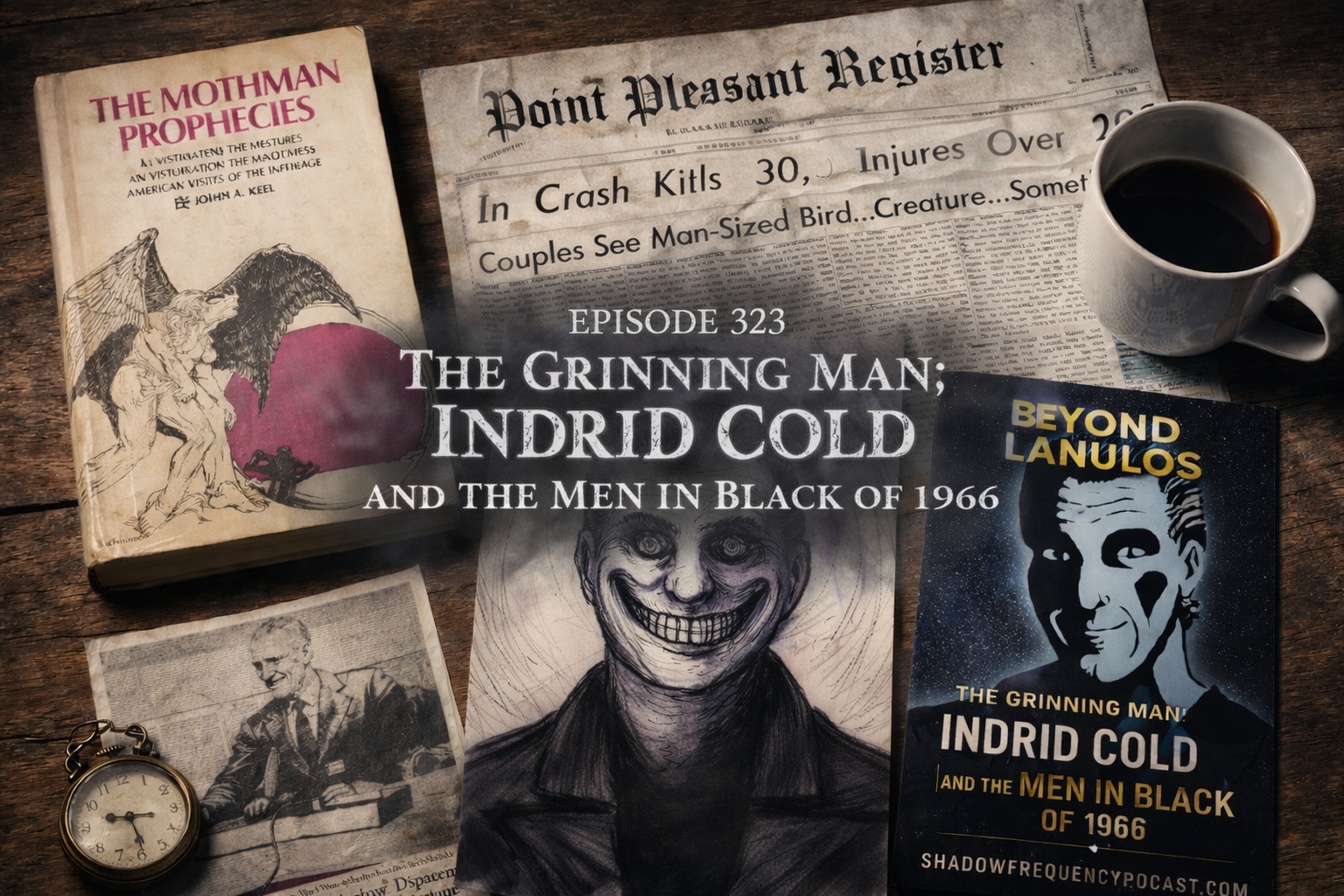
The Grinning Man: Indrid Cold, Men in Black Dread, and the Smile That Wouldn’t Leave
👁️🌌📻 by juniper ravenwood
A Smile in the Dark 😨
Some paranormal cases are frightening because they are wild. Others are frightening because they are controlled. That is what makes The Grinning Man such an effective and lasting piece of modern folklore. He is not described like a raging beast or a screaming specter. He is calm. He is poised. He appears almost human. And somehow, that makes him worse.
The figure most often associated with this legend is Indrid Cold, a name tied to the 1966 encounter reported by Woodrow Derenberger near Parkersburg, West Virginia. Derenberger said that while driving home on a dark stretch of Interstate 77, a strange craft blocked his path. From it stepped a tall, dark-haired man who communicated in a manner that felt less like ordinary speech and more like something passing directly into the mind. The encounter quickly became one of the strangest stories to emerge from the already bizarre atmosphere of the Ohio Valley in 1966. 🌙🚗
Why the Case Feels So Personal 🛸
What makes this story different from so many other UFO reports is how intimate it feels. This was not some distant light in the sky. It was not an object spotted high above the treeline. This was a face-to-face encounter on a wet road at night, close enough to register expression, posture, tone, and calmness. That detail changes everything.
In later retellings, that calm visitor takes on the eerie qualities that would define the legend: a polished manner, an almost artificial friendliness, and of course the unsettling smile. Over time, the image of the “Grinning Man” became stronger and more theatrical, especially as writers folded the case into a larger body of UFO and Fortean lore. But that may be exactly why the case remains so powerful. It sits at the point where witness testimony becomes legend, and legend becomes something larger than any single report. 📂👽
The Men in Black Connection 🕴️🚘
The case becomes even more unnerving when the Men in Black atmosphere enters the picture. In later accounts, Derenberger’s story is surrounded by reports of strange visitors, black vehicles, ominous attention, and the sense that once a person sees something extraordinary, they are no longer alone with it.
That layer of the legend is important because it shifts the story from strange encounter to possible surveillance. Suddenly the question is no longer just, What did he see? It becomes, Who noticed that he saw it? That is where the Grinning Man story moves into deeper paranormal territory. The dark road becomes only the beginning. The smiling visitor is one thing. The possibility of follow-up is another. And that is often the part that lingers longest with listeners. 🌑📞
Folklore Forming in Real Time 📚
The Grinning Man is also a fascinating case study in how modern folklore grows. The 1966 Ohio Valley was already becoming a pressure cooker of sightings, rumors, media attention, and fear. Add one named witness, a highly unusual humanoid report, later retellings by gifted paranormal writers, and a rising Men in Black mythology, and suddenly the story has everything it needs to live far beyond its original moment.
That does not make it less compelling. If anything, it makes it more compelling. Watching a legend take shape while people are still reacting to it is part of what gives this case its strange electricity. You can almost hear the folklore assembling itself in the static. ⚡📡
Why It Still Works 👁️
The Grinning Man endures because he occupies a perfect uncanny space. He is not grotesque enough to be dismissed as pure fantasy, and not ordinary enough to feel safe. He is a figure standing at the edge of the familiar, wearing the face of a person but carrying the emotional weight of something entirely other.
That is why the image survives. Not because we can prove exactly what happened on that West Virginia highway, but because the story captures a uniquely unsettling possibility: that the truly strange does not always arrive with violence. Sometimes it arrives politely. Sometimes it smiles. Sometimes it tells you not to be afraid. And sometimes that is exactly why you should be. 🌫️👽
— Juniper Ravenwood

Producer, The Shadow Frequency
Juniper Ravenwood is the heart and soul behind the production of The Shadow Frequency podcast, bringing her passion for the paranormal and storytelling to every episode. Born in the wide-open plains of South Dakota, Juniper grew up surrounded by tales of mystery and the unexplained, which sparked her fascination with the eerie unknown. With a deep love for podcasting and the boundless world of the internet, she crafts each episode with a blend of spooky atmosphere and meticulous care, ensuring listeners are drawn into the shadows. As the producer, Juniper not only manages the show’s chilling vibe but also connects with fans through the Mailbag segment and the podcast’s vibrant online community. When she’s not diving into creepy stories or exploring the digital realm, you can find her chasing new paranormal mysteries or dreaming up ways to make The Shadow Frequency even spookier. Connect with Juniper and the show at shadowfrequencypodcast.com or shadowpodcast@protonmail.com!

Lost Cities Beneath the Amazon Canopy


 RSS Feed