Little Red Riding Hood Wolf in the Woods
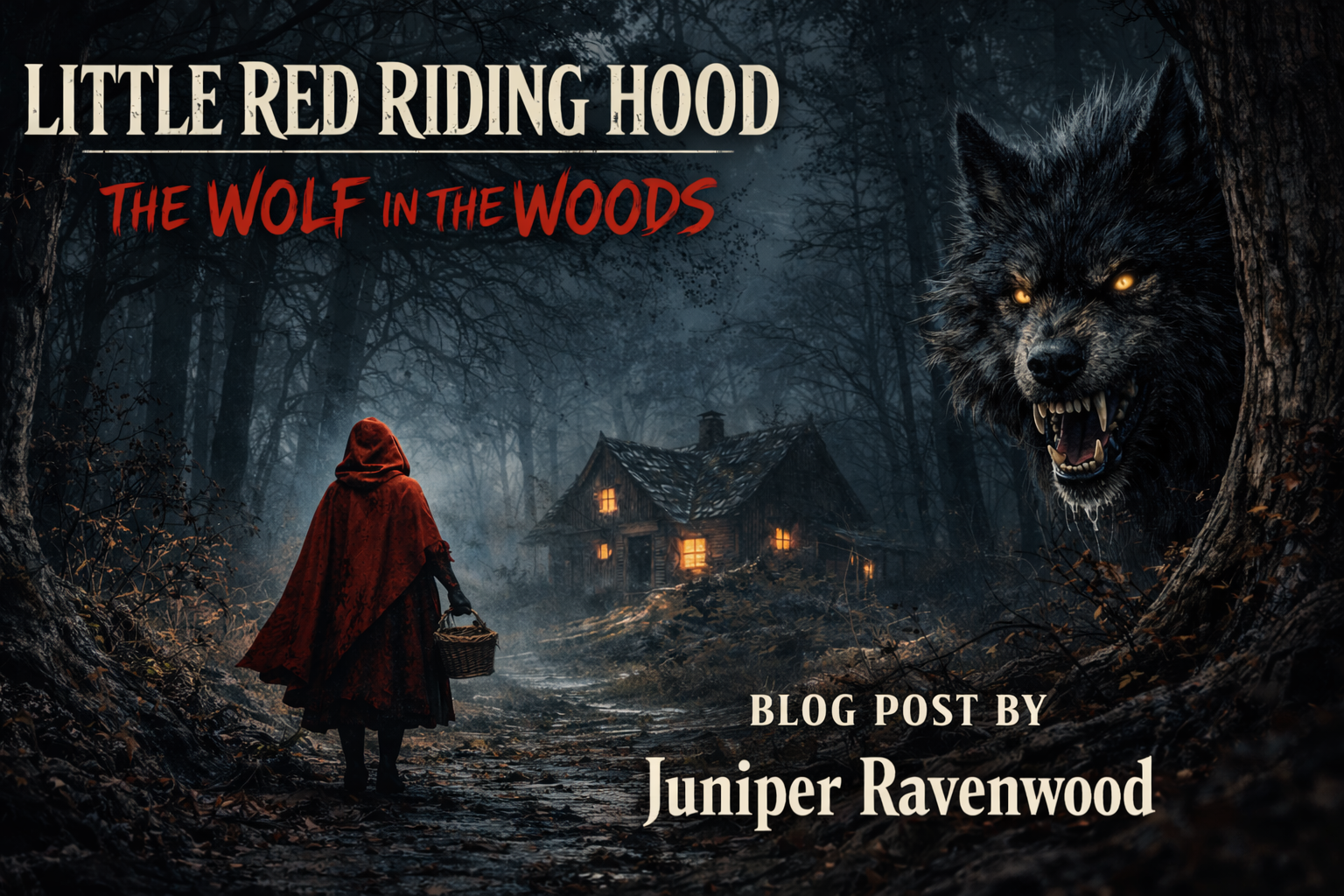
Little Red Riding Hood and the Dark Folklore Behind the Fairy Tale 🌲🐺
By Juniper Ravenwood
Most of us meet Little Red Riding Hood as children. It arrives dressed like a simple cautionary tale: don’t wander, don’t talk to strangers, and don’t stray from the path. But the deeper you go into the story’s history, the more obvious it becomes that this tale was never meant to be comfortable. Beneath the bright red hood and storybook illustrations is something much older, colder, and more unnerving. 📕🌫️
A Tale Born in Dangerous Woods 🌲
Long before the story was polished into a nursery favorite, Little Red Riding Hood seems to have lived in the fear-soaked oral traditions of rural Europe. This was a world of isolated cottages, narrow village paths, deep forests, and real danger waiting just beyond the fields. In that setting, the woods were not picturesque. They were uncertain, hungry, and filled with things people did not fully understand.
That’s what gives the tale its lasting strength. At its core, it is a story about vulnerability. A girl leaves the safety of home. She enters a liminal place. She meets something that looks almost familiar, sounds almost calm, and uses conversation as a weapon. That structure still works because it reaches straight into a fear that never really disappeared. 🕯️
The Older Version Was Far Darker 🩸
One of the most unsettling parts of researching this legend is realizing how much softer later retellings became. In Charles Perrault’s 1697 version, there is no heroic rescue. The wolf reaches grandmother’s house first, gains entry, and waits. When the girl arrives, the story ends in devouring and warning. It is blunt, bleak, and clearly meant as a lesson about predators who wear charm like a disguise.
Later, the Brothers Grimm reworked the story into something more survivable. Their version adds the woodsman, the rescue, and even a second wolf episode that suggests hard-won experience. But even with those changes, the nightmare remains intact. The wolf still speaks. The wolf still deceives. The wolf still gets inside the house. And that image has haunted the story ever since. 🐺
Was the Wolf Ever Just a Wolf? 🌕
That question is where the folklore gets especially eerie. Some historians and interpreters have suggested that the wolf in Little Red Riding Hood may have echoed fears from Europe’s werewolf panic — an era when accusations of child-killing lycanthropes spread through parts of the continent. Whether that theory fully explains the tale or not, it gives the story a chilling extra dimension.
Because this wolf does not behave like an ordinary animal. He asks questions. He gathers information. He impersonates safety. He invades domestic space. That makes him feel less like a beast and more like a monster wearing the shape of one. Maybe that is why the tale remains so powerful: the wolf can be read as animal, stranger, predator, shapeshifter, or some blurred combination of all four. 👁️
Why the Tale Still Works Today 🌘
Little Red Riding Hood endures because it strikes at something primal. It is not just about what waits in the woods. It is about the horrifying possibility that danger can imitate trust, arrive before you do, and be waiting in the one place that should feel safe.
That’s why this story still unsettles modern listeners. We may live farther from dark forests now, but we still understand the path, the wrong conversation, the false voice, and the moment a familiar space suddenly feels wrong. The story survives because the wolf keeps changing shape to fit the age. And in every age, people still know what it feels like to sense that something is watching from just beyond the tree line. 🌲✨
— Juniper Ravenwood

Producer, The Shadow Frequency
Juniper Ravenwood is the heart and soul behind the production of The Shadow Frequency podcast, bringing her passion for the paranormal and storytelling to every episode. Born in the wide-open plains of South Dakota, Juniper grew up surrounded by tales of mystery and the unexplained, which sparked her fascination with the eerie unknown. With a deep love for podcasting and the boundless world of the internet, she crafts each episode with a blend of spooky atmosphere and meticulous care, ensuring listeners are drawn into the shadows. As the producer, Juniper not only manages the show’s chilling vibe but also connects with fans through the Mailbag segment and the podcast’s vibrant online community. When she’s not diving into creepy stories or exploring the digital realm, you can find her chasing new paranormal mysteries or dreaming up ways to make The Shadow Frequency even spookier. Connect with Juniper and the show at shadowfrequencypodcast.com or shadowpodcast@protonmail.com!

Lost Cities Beneath the Amazon Canopy


 RSS Feed