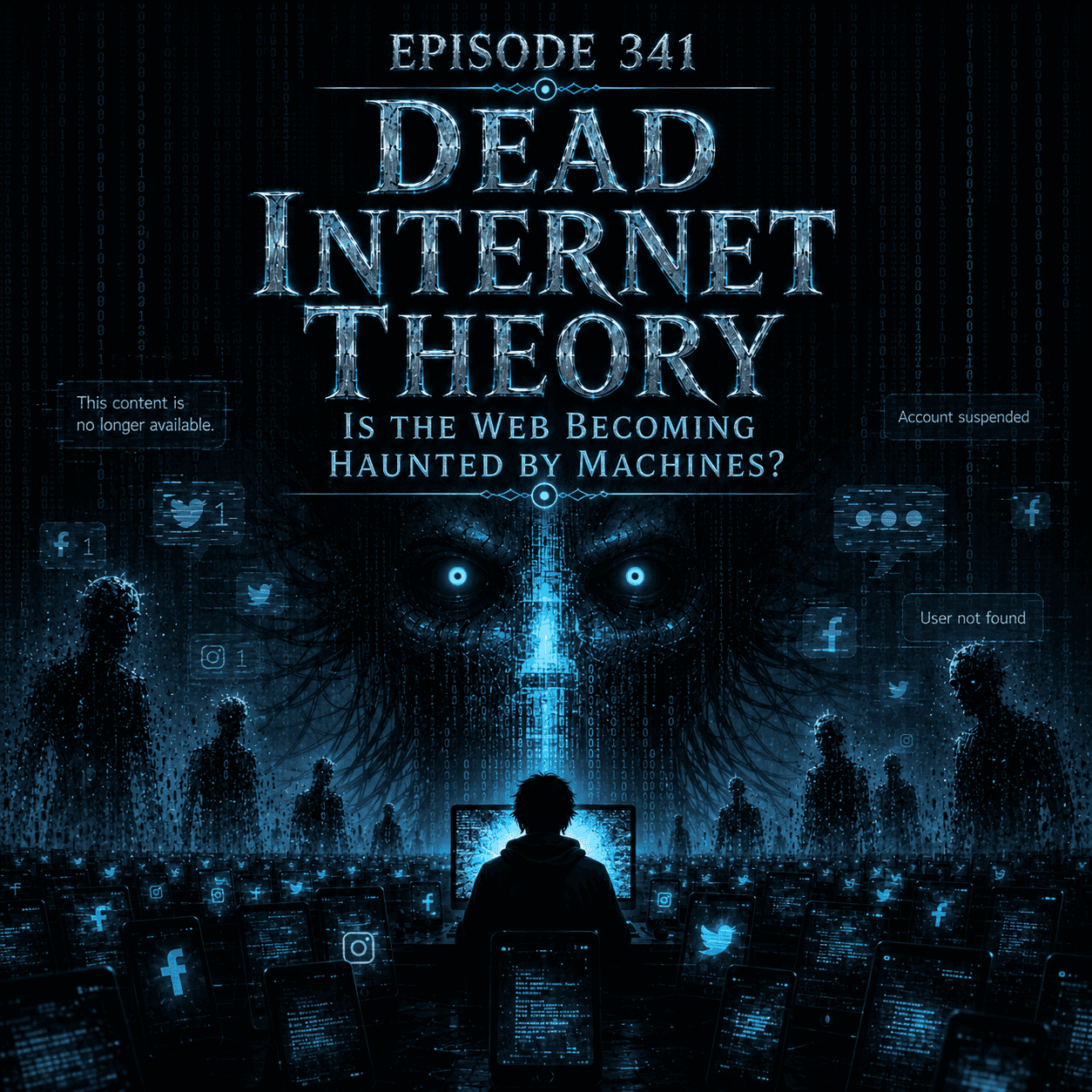
Dead Internet Theory
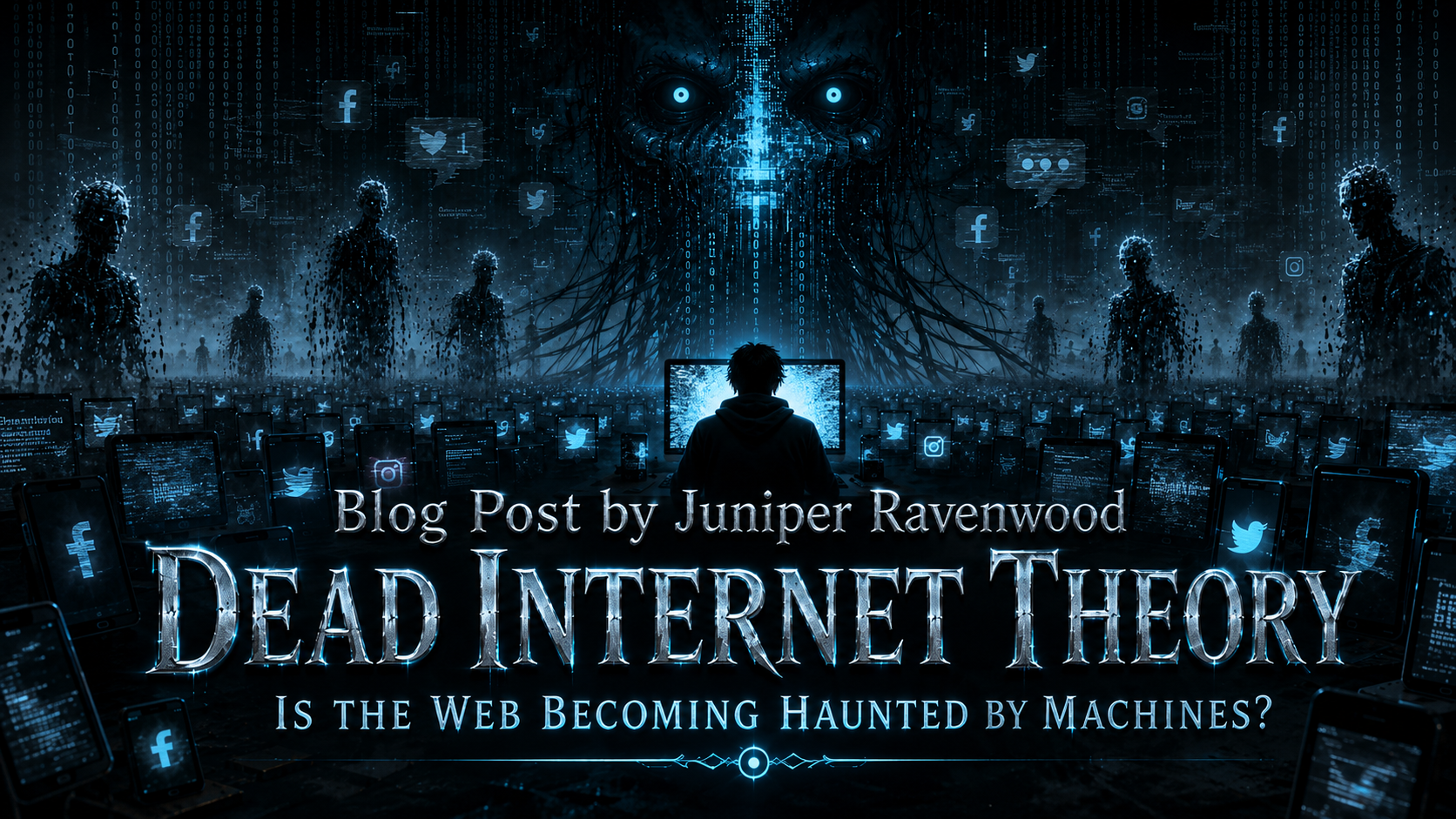
Dead Internet Theory: Is the Web Becoming Haunted by Machines?
By Juniper Ravenwood
The Internet Still Speaks… But Who Is Talking? 👁️💻
There was a time when the internet felt wild, messy, and unmistakably human. It was full of strange forums, half-broken websites, personal blogs, bad graphics, typo-filled arguments, and little communities that felt like they were held together with duct tape and obsession. It was chaotic, sometimes ugly, often ridiculous — but it had fingerprints.
Now, the web feels different.
Scroll through a social feed and you may see the same kind of post again and again. The same tone. The same polished outrage. The same oddly perfect image. The same comment that sounds friendly, but hollow. Search for something, and an AI-generated answer may appear before you ever reach the original source. Read an article, and you may wonder whether a person wrote it, a machine assembled it, or some strange combination of both.
That uneasy feeling is the heart of Dead Internet Theory. 🕸️
The theory claims that the internet, once filled mostly with human voices, has become increasingly dominated by bots, AI-generated writing, fake engagement, automated accounts, synthetic images, and algorithmic manipulation. The most extreme version says this is intentional — a managed digital illusion designed to shape what we think, buy, believe, and fear.
The grounded version may be even creepier: maybe nobody killed the internet. Maybe it was simply optimized until the human parts started fading into the background.
The Bot Crowd at the Digital Door 🤖
One of the reasons Dead Internet Theory has such staying power is that pieces of it are rooted in real trends. Bot traffic is not folklore. AI-generated writing is not imaginary. Synthetic images are not rare. Engagement farms, fake comments, and automated accounts are all part of the modern online environment.
That does not prove that the internet is “dead,” or that every comment thread is fake. But it does explain why so many people feel like the web has become strangely hollow. When nearly every platform rewards speed, volume, engagement, and emotional reaction, machines have a natural advantage. They do not sleep. They do not get bored. They do not worry whether a post is meaningful. They only need to perform well enough to keep the system feeding them forward.
And that is where the haunting begins. 👻
Not with a ghost in the machine, but with a machine learning how to sound like a ghost of us.
The Haunted Feed 📱
Modern internet folklore does not always come from abandoned houses or shadowy roads. Sometimes it comes from comment sections. Sometimes it comes from viral AI images. Sometimes it comes from a search result that answers your question so smoothly that you forget to ask who wrote the answer in the first place.
That is what makes Dead Internet Theory such a perfect Shadow Frequency case. It is not just about technology. It is about reality itself. If the digital spaces we rely on to understand the world are increasingly filled with imitation — imitation voices, imitation images, imitation popularity, imitation consensus — then how do we know what we are really seeing?
A fake crowd can still influence a real one. A synthetic image can still create real emotion. A bot swarm can still make something seem popular, hated, urgent, or true. And once humans begin reacting to that artificial signal, the fake thing enters the real world.
That is not just unsettling. That is folklore being born in real time.
Maybe the Internet Was Optimized to Death 🪦
The creepiest possibility is not necessarily that one secret group flipped a switch and replaced the internet with machines. The creepiest possibility is that it happened gradually, through profit, convenience, automation, and attention.
Every rough human edge became something to smooth out. Every pause became a place for an ad. Every question became a data point. Every feeling became a lever.
The internet may not be dead. There are still real people out there writing, arguing, laughing, creating, and searching for connection. But parts of the web now feel like a haunted house where every room is brightly lit, every voice is friendly, and every mirror is trying to sell you something.
So tonight, when you close your laptop or set your phone face down, think about the last thing you read online.
Did a person write it?
Did a machine assemble it?
Or did something in between whisper it into the feed?
Until next time, keep the signal strange… and make sure something living is answering back.
— Juniper Ravenwood 🖤

Producer, The Shadow Frequency
Juniper Ravenwood is the heart and soul behind the production of The Shadow Frequency podcast, bringing her passion for the paranormal and storytelling to every episode. Born in the wide-open plains of South Dakota, Juniper grew up surrounded by tales of mystery and the unexplained, which sparked her fascination with the eerie unknown. With a deep love for podcasting and the boundless world of the internet, she crafts each episode with a blend of spooky atmosphere and meticulous care, ensuring listeners are drawn into the shadows. As the producer, Juniper not only manages the show’s chilling vibe but also connects with fans through the Mailbag segment and the podcast’s vibrant online community. When she’s not diving into creepy stories or exploring the digital realm, you can find her chasing new paranormal mysteries or dreaming up ways to make The Shadow Frequency even spookier. Connect with Juniper and the show at shadowfrequencypodcast.com or shadowpodcast@protonmail.com!

Lost Cities Beneath the Amazon Canopy


 RSS Feed