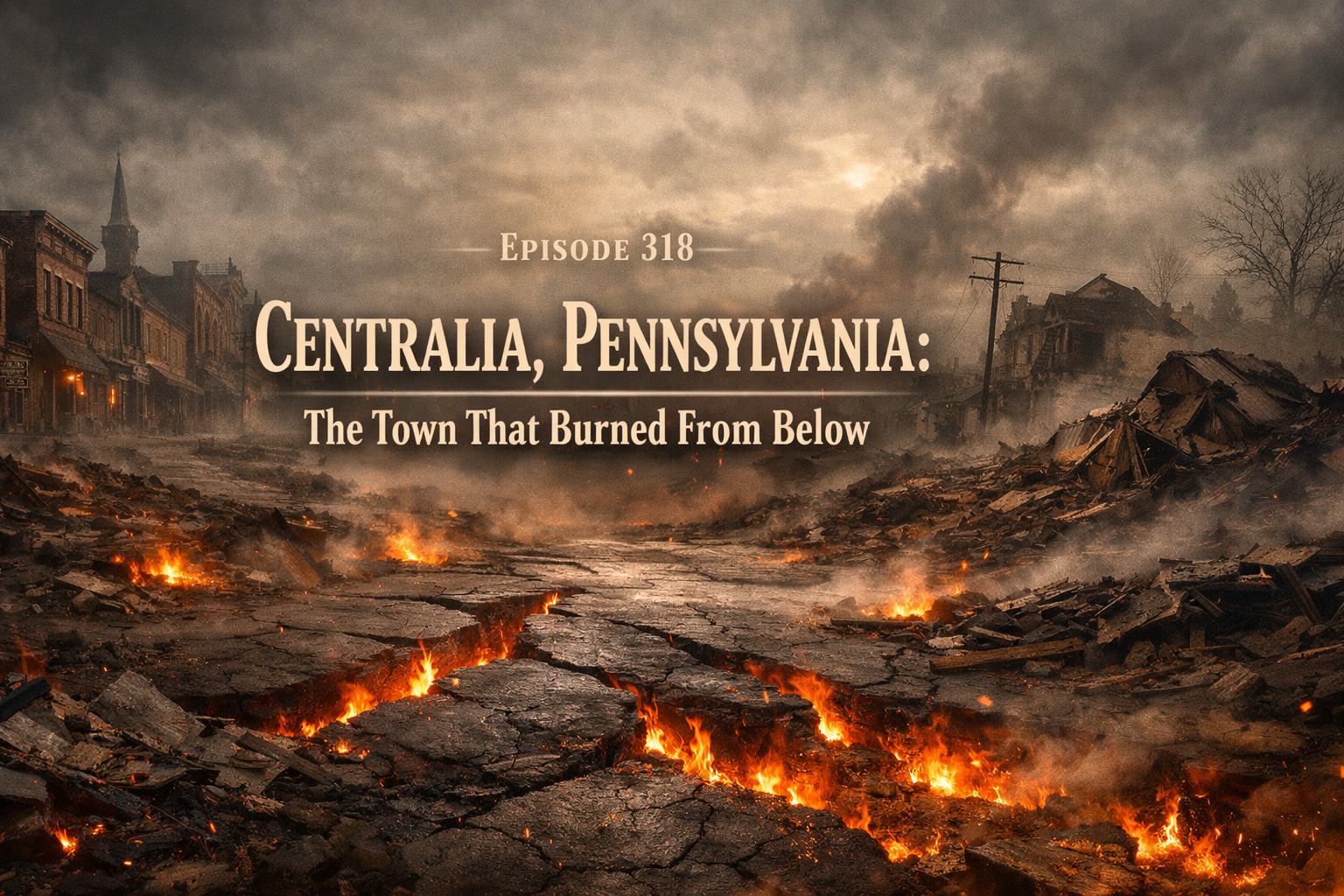
Centralia, Pennsylvania: The Town Burned From Below
Blog Post 🕯️🔥
By Juniper Ravenwood
🔥 A Town That Didn’t Vanish All at Once
Centralia, Pennsylvania is one of those places that almost sounds invented for a horror story — a mining town with a fire still burning beneath it, decades after the first alarm was raised. But the part that makes Centralia so unsettling is that it did not disappear in one cinematic catastrophe. It was unmade slowly. Pennsylvania DEP says the underground fire has been burning in the Buck Mountain coal bed since May 1962, and the official warning today is still blunt: the area remains dangerous because of toxic gases and sudden ground collapse. That alone is enough to make Centralia feel unreal. It is not just a ghost town because people left. It is a ghost town because the earth itself became untrustworthy.
⛏️ Built by Coal, Betrayed by Coal
Like so many towns in Pennsylvania’s anthracite region, Centralia existed because of coal. The same industry that created jobs, homes, churches, and neighborhoods also left behind the underground maze that made disaster possible. DEP’s most widely accepted explanation is that a trash fire near an abandoned strip pit spread into combustible material and then into the mine workings below. From there, it became a nightmare of geology, fuel, and time. The state’s chronology records decades of control efforts, millions spent, Route 61 damaged and closed, and hundreds of properties eventually acquired as families relocated away from the hazard. Centralia was not abandoned because of rumor. It was abandoned because the danger was real enough to crack roads, vent gases, and swallow certainty with every passing year.
🌫️ When a Real Disaster Starts to Feel Like a Curse
And yet Centralia never stayed only an industrial story. Places like this collect meaning. Once a town begins steaming from the ground and emptying itself house by house, people start reaching for older language — curse, omen, prophecy, punishment. That is where the local Father McDermott story enters the picture. According to legend, after conflict tied to the Molly Maguires era, Father Daniel Ignatius McDermott was assaulted and foretold that one day only the church would remain. Historians and archivists remain cautious here: even the broader story of the Molly Maguires is still debated, and the “curse” belongs to lore, not documented proof. But folklore does not need scientific standing to survive. It survives because it gives shape to dread. In Centralia, that dread had plenty to attach itself to.
🕳️ Why Centralia Still Haunts People
One of the reasons Centralia continues to fascinate is that it sits right on the fault line between fact and nightmare. The fact is horrifying enough: a fire burning under a town since 1962, a 1981 sinkhole nearly taking the life of 12-year-old Todd Domboski, a highway broken by the weakened ground below, and a place the state still treats as dangerous. But the nightmare is what people feel when they picture it — the thought of a hidden heat below the streets, the idea that a town could lose to something invisible, patient, and underground. Centralia endures because it never needed exaggeration to feel supernatural. The truth already glows with that strange, infernal light.
🖋️ Final Thoughts
Centralia is a reminder that sometimes the eeriest American legends grow out of documented reality. A curse may not have caused the fire, but folklore is how people live with the feeling of a place like that — a place where the map still says “town,” but the ground says otherwise.
— Juniper Ravenwood

Producer, The Shadow Frequency
Juniper Ravenwood is the heart and soul behind the production of The Shadow Frequency podcast, bringing her passion for the paranormal and storytelling to every episode. Born in the wide-open plains of South Dakota, Juniper grew up surrounded by tales of mystery and the unexplained, which sparked her fascination with the eerie unknown. With a deep love for podcasting and the boundless world of the internet, she crafts each episode with a blend of spooky atmosphere and meticulous care, ensuring listeners are drawn into the shadows. As the producer, Juniper not only manages the show’s chilling vibe but also connects with fans through the Mailbag segment and the podcast’s vibrant online community. When she’s not diving into creepy stories or exploring the digital realm, you can find her chasing new paranormal mysteries or dreaming up ways to make The Shadow Frequency even spookier. Connect with Juniper and the show at shadowfrequencypodcast.com or shadowpodcast@protonmail.com!

Saint-Germain: The Immortal Count