Blog Post: Unraveling the Honey Island Swamp Monster
✍️ By Juniper Ravenwood
🌿 A Murky Legend in Louisiana’s Bayous
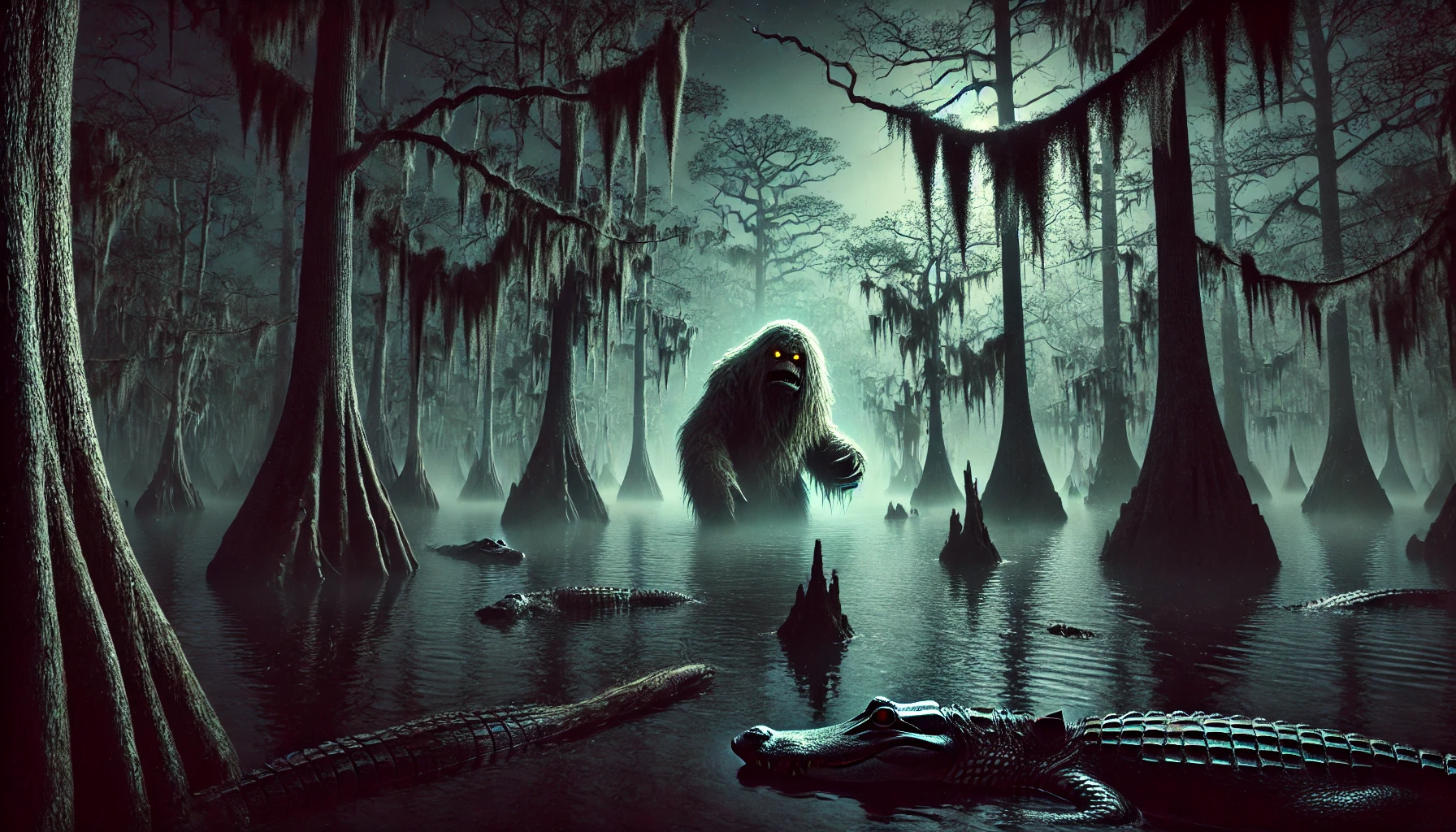
Deep in the 70,000-acre wilderness 🌳🌫️ of Louisiana’s Honey Island Swamp, something stirs… The Honey Island Swamp Monster 👣, a seven-foot, gray-haired beast with glowing yellow eyes 👀✨, has haunted local lore for decades. Its legend weaves together Native American myths 🪶, Cajun folklore 🌕, and a bizarre tale of a circus train wreck 🎪🚂.
As the producer of The Shadow Frequency, I dove into the archives 📂 for Episode 185 to uncover the chilling details 🕯️ of this elusive creature—and let me tell you—it’s a story that clings to you like swamp mist 🌫️.
👀 The First Sighting: Harlan Ford’s Encounter
In 1963, Harlan Ford ✈️, a retired air traffic controller and wildlife enthusiast 🦌, was scouting the swamp with his friend Billy Mills when they stumbled upon something terrifying 😨.
A towering figure, cloaked in matted gray hair 🦍, stared at them with eyes that burned like embers 🔥. Before they could react, it vanished, leaving behind strange, webbed footprints 🦶. Ford later cast these prints 🧪, and in 1974, he found more evidence: mauled wild boars 🐗💀 and those same eerie tracks.
His grainy Super 8 footage 🎥, discovered after his death, shows a hulking shape moving through the cypress trees 🌲, cementing the creature’s place in paranormal history 👻.
🪶 Ancient Myths and Modern Mysteries
The swamp’s Native American tribes, the Choctaw and Acolapissa, spoke of the Letiche—a child raised by alligators 🐊👶, transformed into a meat-eating, half-human creature.
Cajun locals call it the Loup Carou 🌕🐺, tying it to werewolf legends. These stories aren’t just folklore; they’re a warning ⚠️ woven into the swamp’s DNA.
Then there’s the wildest theory: a circus train derailment 🚂💥 in the early 1900s supposedly freed chimpanzees or gorillas 🐒🦍 into the Pearl River, where they adapted. Their descendants evolving into the webbed-footed monster is a tale that feels like it belongs in a horror novel 📖🕯️.
🔍 The Evidence: Footprints, Film, and Fear
What keeps this legend alive? The physical evidence 🧾.
Four-toed, webbed plaster casts 🦶 don’t match any known animal.
Ford’s Super 8 footage 🎥 (housed at the Abita Mystery House 🏚️) is vague, yet chilling.
Countless stories from fishermen 🎣, hunters 🦌, and swamp tour guides 🛶: glowing eyes 👀 in the dark, trashed camps, and a stench like rotting earth 💀.
The swamp itself—vast, shadowy, and secretive 🌫️🌲—is the perfect hiding place.
🤔 A Skeptical Ripple in the Bayou
The circus train story, while compelling 🎪, lacks historical record 📚. Could the “monster” be a misidentified bear 🐻 or escaped primate 🐒 exaggerated by fear?
Some even suggest Harlan Ford may have spun the tale 🌀 to protect his hunting grounds. Yet, the footprints 🦶 and the sheer volume of credible sightings 👀 make it hard to dismiss.
The swamp keeps its secrets locked tight 🔒.
🌌 Why the Swamp Monster Endures
The Honey Island Swamp Monster isn’t just a creature—it’s a feeling 😱.
It’s the prickle on your neck 🫣 when the swamp goes silent, the splash 🌊 when no one’s there.
Whether it’s a lost primate 🦍, a cursed spirit 👻, or something beyond understanding 🌀, it’s a reminder that some places remain untamed 🌲, their mysteries untouched by modern light.
If you’re brave enough 💪, book a swamp tour 🛶 near Slidell, Louisiana. Just don’t wander too far from the boat 🚤…
Signed,
👩💻 Juniper Ravenwood

Producer, The Shadow Frequency
Juniper Ravenwood is the heart and soul behind the production of The Shadow Frequency podcast, bringing her passion for the paranormal and storytelling to every episode. Born in the wide-open plains of South Dakota, Juniper grew up surrounded by tales of mystery and the unexplained, which sparked her fascination with the eerie unknown. With a deep love for podcasting and the boundless world of the internet, she crafts each episode with a blend of spooky atmosphere and meticulous care, ensuring listeners are drawn into the shadows. As the producer, Juniper not only manages the show’s chilling vibe but also connects with fans through the Mailbag segment and the podcast’s vibrant online community. When she’s not diving into creepy stories or exploring the digital realm, you can find her chasing new paranormal mysteries or dreaming up ways to make The Shadow Frequency even spookier. Connect with Juniper and the show at shadowfrequencypodcast.com or shadowpodcast@protonmail.com!

Saint-Germain: The Immortal Count