11 Missing Scientists Rumor Machine
When a Story Feels Like a Warning 👁️
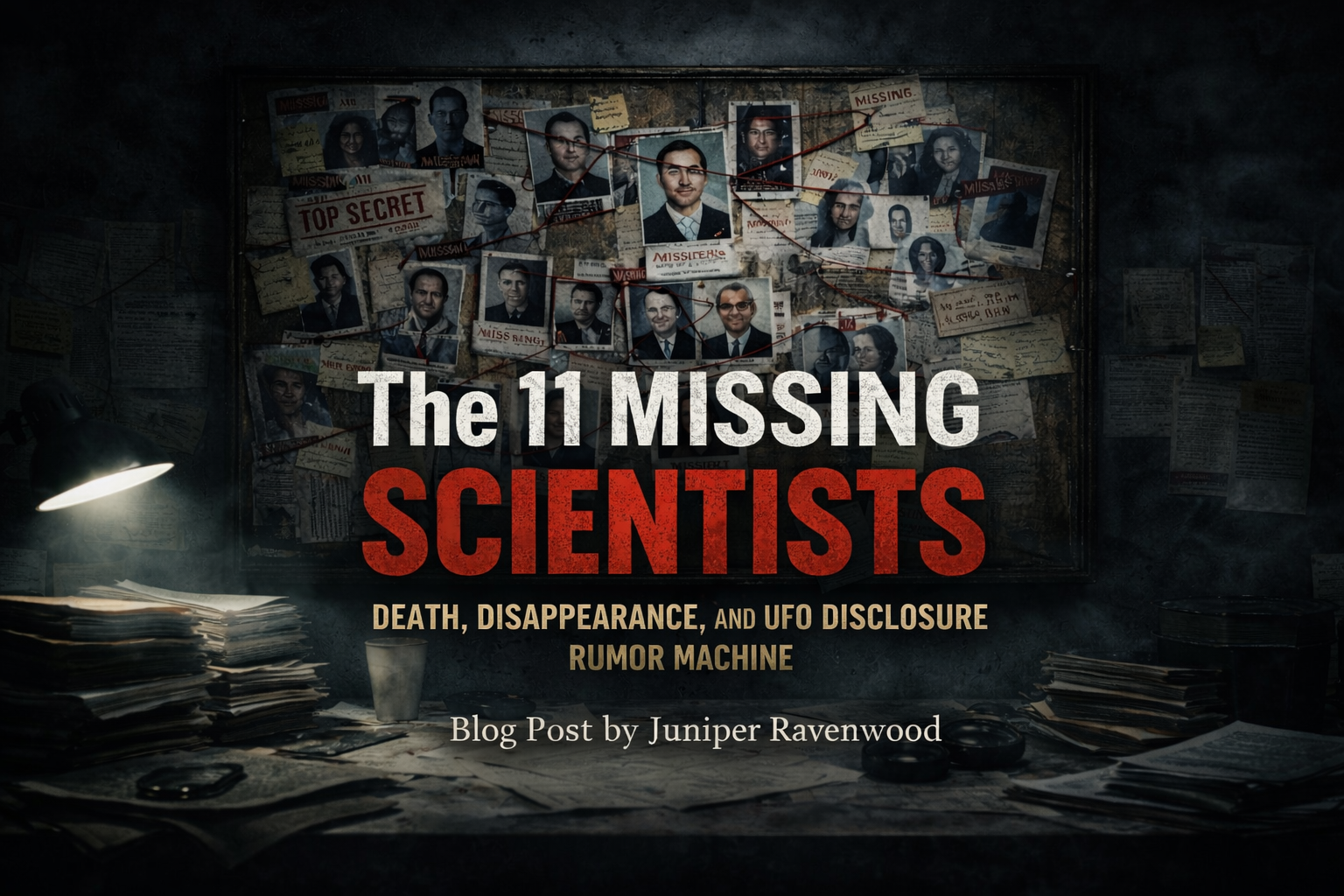
There are some stories that arrive like ordinary headlines, and then there are stories that feel like they’ve stepped into the room carrying a shadow with them. The “11 Missing Scientists” story is one of those. On the surface, it looks like a cluster of deaths and disappearances connected in loose ways to government labs, aerospace work, nuclear facilities, and advanced research. But the moment those details hit the public imagination, the story became something larger — a modern mystery wrapped in secrecy, fear, and the irresistible possibility that someone, somewhere, knew too much.
That’s what makes this case so compelling. It is not just about the names on the list. It is about the atmosphere around them. Sensitive institutions. Fragmented facts. High-level acknowledgment. A national moment already saturated with UAP talk and disclosure anxiety. Put those pieces together, and the result is almost guaranteed to feel like the beginning of a legend.
The Eerie Power of the List 📁
Lists have power. Once the public hears a phrase like “11 missing scientists,” it stops sounding like separate events and starts sounding like a pattern. That’s where the tension in this episode lives. Some of the names tied to the story have backgrounds that naturally invite speculation — military research, aerospace engineering, government-linked science, exotic-tech chatter. Others appear, at least in public reporting, to have much more ordinary roles within very large institutions. But when those names are placed side by side, the differences can disappear, and what remains is the sense that the list itself means something.
That’s the part that gets under your skin. Not because it proves a hidden hand is at work, but because it gives the imagination just enough structure to start building one.
Why UFO Rumors Attached So Fast 🛸
Of course, once the phrase “scientists tied to sensitive programs” started spreading, UFO rumors were never going to be far behind. In 2026, the public conversation around UAPs is already charged. Disclosure language is back in circulation. Military and aerospace institutions are already loaded with decades of mystery in the public imagination. It only takes one or two evocative biographies, one Wright-Patterson connection, one antigravity whisper, or one vaguely classified-sounding job title, and suddenly the internet begins weaving a much bigger story.
That bigger story is seductive. It suggests a hidden class of people carrying dangerous knowledge about black-budget propulsion, exotic science, or buried UFO truths. It transforms tragedies into possible signals. It turns disappearances into warnings. It offers a dramatic answer before the evidence has finished speaking.
Where the Real Mystery Lives 🌌
What makes this case especially fascinating is that the strongest eerie angle may not be a proven cover-up at all. It may be the way a conspiracy theory builds itself in real time. That does not make the fear foolish. Far from it. The fear comes from something real: institutions people do not fully trust, official statements that sound serious, and a public history full of withheld information and later admissions.
But that is exactly why stories like this endure. They thrive in the gap between what is known and what is merely suspected. They live in the unfinished space where people start asking the same question over and over again: what if the story we’re being told is only the outer shell?
The Shadow Frequency Angle 🔦
For us, this episode is not about pretending the answer is already settled. It is about leaning into the atmosphere without losing sight of the tension that makes the case so powerful. The White House review is real. The cases are real. The names are real. The public obsession is real. But the master explanation — the single dark truth that ties it all together — remains just out of reach.
And sometimes that’s exactly where the most haunting stories live.
Because once a case like this enters public memory, it no longer belongs only to investigators or agencies or headlines. It becomes folklore. It becomes campfire fuel for the digital age. It becomes one of those stories people return to late at night, asking whether the facts were ever truly random… or whether the pattern was there all along, waiting for enough people to finally see it.
— Juniper Ravenwood 🌑

Producer, The Shadow Frequency
Juniper Ravenwood is the heart and soul behind the production of The Shadow Frequency podcast, bringing her passion for the paranormal and storytelling to every episode. Born in the wide-open plains of South Dakota, Juniper grew up surrounded by tales of mystery and the unexplained, which sparked her fascination with the eerie unknown. With a deep love for podcasting and the boundless world of the internet, she crafts each episode with a blend of spooky atmosphere and meticulous care, ensuring listeners are drawn into the shadows. As the producer, Juniper not only manages the show’s chilling vibe but also connects with fans through the Mailbag segment and the podcast’s vibrant online community. When she’s not diving into creepy stories or exploring the digital realm, you can find her chasing new paranormal mysteries or dreaming up ways to make The Shadow Frequency even spookier. Connect with Juniper and the show at shadowfrequencypodcast.com or shadowpodcast@protonmail.com!

Lost Cities Beneath the Amazon Canopy


 RSS Feed